
Photography · Madeira
Milky Way photography in Madeira: dark spots, season and live sky
The spot never changes; the light does. Golden hour here can be a clean sea of cloud or a washed-out haze, and the window is short. Knowing where to stand is the easy part.
An island 700 kilometres from the nearest mainland glow should be an astro paradise, and above the cloud line Madeira mostly is. The catch is that the same mountains that lift you over the light also make the cloud, so the difference between a core-season masterpiece and a wasted night drive is knowing which side of the island is clear after midnight.
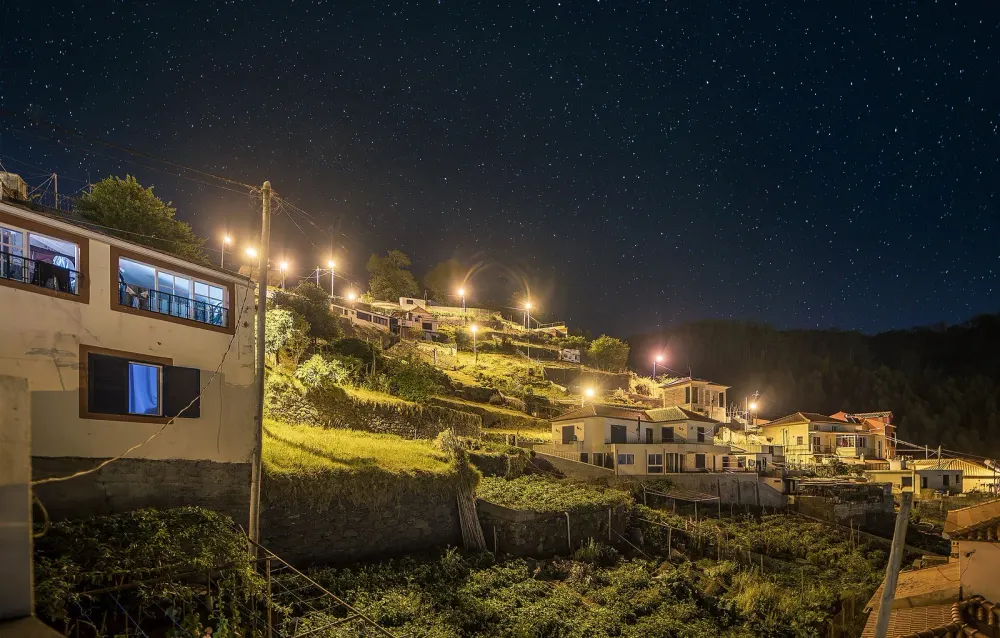
A representative shot of this spot: conditions change day to day.
Live match for this shot
Algorithmic forecast from live data. A high match is a good bet, not a promise.
Where it is actually dark
Funchal and the south coast throw a real glow, around Bortle 6 by local observers' measurements. The northwest and northeast thirds of the island are much darker, in the Bortle 4 range. The working spots: Pico do Arieiro, at 1,818 metres and often the only place above the cloud at all; the Fanal rim, where the old trees hide the Funchal glow to the southeast and give you foregrounds no one else has; Ponta de São Lourenço in the east, where the spring core rises out of the ocean between 2 and 4 a.m. over marked, walkable trails; and the flat Paúl da Serra plateau. Madeira has no official dark-sky certification, so treat published Bortle numbers as honest field estimates rather than survey data.
Season and moon
The galactic core is photographable from March to November. Spring means core rises in the small hours; June to August put it highest in the evening sky, and the Perseids in August are the bonus round. As everywhere, plan within a few nights of the new moon, and remember Madeira's specific saboteur: leste events carry Saharan dust that dims stars in the frame even when the sky looks clear to the eye. A night that is cloud-free but hazy photographs worse than it feels.
Craft on a volcanic island
The standard recipe works: 14 to 24 millimetres, f/1.8 to f/2.8, 10 to 20 seconds, ISO 3200 to 6400, and a tracker if you carry one. Madeira adds wind, especially on the plateau and at Arieiro, so a low tripod stance and a weight hook matter more than usual. Summit nights are cold in any season. For foregrounds, the fenced tils at Fanal, the ridge silhouettes at Arieiro and the lighthouse road at São Lourenço all give the frame something the sky alone cannot.
The Perseids of 12 to 13 August 2026: peak night, no moon in the way
The Perseids are debris shed by comet Swift-Tuttle, burning up as Earth crosses the comet's old trail every August. The shower peaks on the night of 12 to 13 August, and most years a bright moon washes out everything but the brightest streaks. Not this year. The moon is new on peak night, so it sets with the sun and never comes back to interfere, leaving the sky as dark as this time of year gets. Peak night landing on new moon only lines up for a handful of years each cycle, and 2026 is one of them.
Why altitude does the real work here
A meteor shower does not need a special vantage point the way a sunset or an eclipse does. The streaks can appear anywhere overhead, and tracing them back points toward the constellation Perseus, low in the northeast after dark and higher by the time it gets close to dawn. What actually decides the night is the same thing that decides everything else on this page: how dark the sky really is, and how much cloud is sitting in it. Altitude does most of that work. Above roughly 1,400 to 1,800 metres you clear the marine cloud deck that regularly sits over the coast, and you put real distance between your eye and the scattered light from the towns below.
The same four places, one more reason to go
The four places already named on this page turn out to be exactly the right list for the Perseids too. Fanal and the Paúl da Serra plateau sit in the dark northwest, well clear of the Funchal glow, and the plateau's flat, open horizon gives an unobstructed view of the whole sky. Pico do Arieiro, at 1,818 metres, is often the one spot standing above the cloud altogether. Achada do Teixeira, at around 1,592 metres and the trailhead for the short walk up to Pico Ruivo, sits in the same high, sparsely lit stretch of the central mountains. None of that guarantees any single night. Cloud can still sit over any of them, and reading that in real time is exactly what the live match above is for, not a fixed recommendation printed on this page.
The Geminids of 13 to 14 December 2026: peak night, moon out of the way
The Geminids are debris shed not by a comet but by 3200 Phaethon, a rock-comet whose exact nature is still debated. The shower peaks on the night of 13 to 14 December and, per the International Meteor Organization, is usually the strongest meteor shower of the year, producing more meteors per hour than the Perseids at their own peak. The moon is new on 8 December 2026, so by peak night it is a young crescent that sets in the early evening, leaving the whole post-midnight window, when rates climb highest, genuinely dark.
Why the same four places still work
The Geminids radiate from the constellation Gemini, which sits high overhead for most of the night in December rather than skimming the horizon, so altitude and darkness matter more than any single named viewpoint again. Fanal and the Paúl da Serra plateau in the northwest, Pico do Arieiro at 1,818 metres, and Achada do Teixeira near Pico Ruivo stay the working list, exactly as for the Perseids.
Colder, and worth dressing for
December on the plateau and at Arieiro is genuinely cold after dark, well below what an August night feels like, and wind adds to it. Warm layers, a hat and gloves make the difference between watching the whole peak and giving up after twenty minutes.
Trailheads for this shoot: Vereda do Areeiro (PR1), Vereda do Pico Ruivo (PR1.2), Vereda da Ponta de São Lourenço (PR8), Vereda do Fanal (PR13). For the background, the Fanal fog forest guide covers how the fog forms, the season it favours, and the routes in.
Common questions
Where is the best place in Madeira to see the Milky Way?
Pico do Arieiro when the inversion puts you above the cloud, Fanal and the Paúl da Serra plateau in the northwest, and Ponta de São Lourenço in the east for the core rising over the sea in spring. The real question on any given night is cloud, and that is what the live sky check on this page answers.
When can you photograph the galactic core from Madeira?
March to November, with the richest core highest in the evening sky from June to August. Aim for the week around new moon and avoid nights with leste dust in the air, which quietly kills contrast in astro frames.
Is Madeira an official dark sky reserve?
No. There is no Starlight or DarkSky certification for Madeira as of 2026, unlike Alqueva on the mainland. The northern and high parts of the island are genuinely dark anyway; the designation is missing, not the sky.
When is the best night to see the Perseids in Madeira in 2026?
The peak falls on the night of 12 to 13 August 2026, and that night comes with a rare bonus: a new moon, so it never rises to wash out the sky. Meteor rates build after midnight and keep climbing until the sky starts to lighten before dawn. Cloud is still the deciding factor on any given night, and that is what the live match above is reading.
Which is the best spot in Madeira to watch the Perseids?
Altitude and darkness decide it, not one named viewpoint. Fanal and the Paúl da Serra plateau in the northwest, Pico do Arieiro at 1,818 metres, and Achada do Teixeira near Pico Ruivo are all structurally strong bets: height above the cloud, distance from town light, an open horizon. Which one is actually clear on the peak night changes hour by hour, so that call belongs to the live match above, not a fixed list.
When is the best night to see the Geminids in Madeira in 2026?
The peak falls on the night of 13 to 14 December 2026. The moon is new on 8 December, so by peak night it is a thin crescent that sets in the early evening, leaving the post-midnight hours, when meteor rates climb highest, moon-free.
Are the Geminids or the Perseids better to photograph in Madeira?
The Geminids usually produce more meteors per hour, per the International Meteor Organization, but arrive in December's cold and shorter days rather than August's mild nights. Both peak well after midnight and reward the same dark, high spots: Fanal, Paúl da Serra, Pico do Arieiro and Achada do Teixeira.
More photography guides: Fanal fog · Pico do Arieiro sunrise · Seixal black sand · Ribeira da Janela stacks · Madeira sunset spots · Miradouro do Guindaste sunrise
Understand the island's light: microclimate guide · weather by month